W5: "The School that Runs on Kindness and Solar Power"
SDG 4: Quality Education, SDG 7: Affordable and Clean Energy, and SDG: 10 Reduced Inequalities

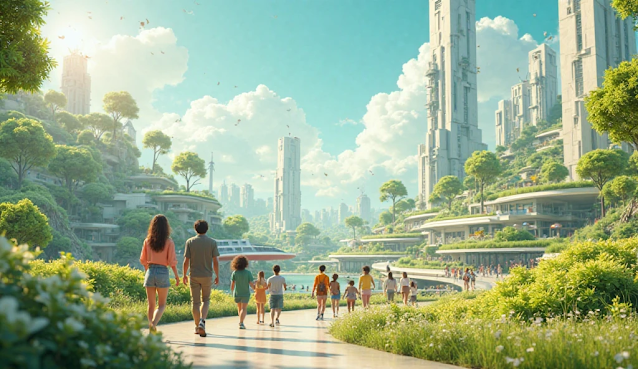
In a quiet valley where sun kisses the hills and wind dance through
trees , a futuristic school thrives not just on technology and innovation, but
on empathy and clean energy, stands a school unlike any other Kindness and
Light Academy. This futuristic institution is more than just a centre of
learning; it is a living, breathing symbol of hope, compassion, and innovation.
Its walls shimmer with sun-soaked panels, and wind turbines gently hum beside
playgrounds filled with laughter. Here, education goes beyond textbooks,
teaching students not only math and science but also empathy, diversity, and
the urgent need to care for the planet.
The school’s structure is a masterpiece of sustainability. The main building, shaped like an open spiral to symbolize growth and openness, is powered entirely by solar energy harnessed through smart glass panels and curved rooftops. Vertical wind turbines line the perimeter, supplying additional clean energy during cloudy days. Rainwater harvesting systems and green walls reduce water waste and improve air quality. Even the classroom floors are made from recycled bamboo and glow subtly at night using stored solar power. In the centre of the campus stands the Skylight Tree a towering structure made of solar branches and LED leaves that collect energy and illuminate the school courtyard, a place where students gather to share stories under its gentle light.


But what truly sets Kindness and Light Academy apart is its heartbeat:
compassion. The moment students step through the entrance, they receive a
Kindness Crystal a translucent pendant that lights up when the wearer performs
acts of kindness, inclusion, or forgiveness. This glowing crystal is not a tool
of punishment or reward but a gentle reminder that the truest measure of a
person lies in how they treat others. There are no rigid tests or rankings
here. Instead, growth is measured in empathy, teamwork, and creative
problem-solving.
The curriculum is deeply rooted in social-emotional learning and
sustainability. From a young age, children are taught to understand their
emotions, resolve conflicts peacefully, and embrace cultural differences.
History lessons highlight heroes of compassion and peacemakers across
civilizations. Science projects involve building miniature wind turbines or
designing biodegradable packaging. One fifth-grade class even partnered with
local farmers to create a solar-powered irrigation system. Through such projects,
students learn the real-world impact of their actions and ideas.
Interviews with students reveal the emotional impact of this unique
approach. “I used to be scared of speaking up,” says Maya, a 12-year-old with
bright eyes and a Kindness Crystal that glows frequently. “But here, no one
judges me. We all come from different places, but we listen to each other like
family.” Another student, Amir, who transferred from a traditional school,
adds, “Back then, I felt invisible. Here, I feel seen. My ideas matter, even if
they’re not perfect.”
Inclusion is not just taught it is lived. Students of all backgrounds,
abilities, and identities learn side by side. Special learning pods cater to
different needs: quiet zones for neurodivergent students, tactile labs for
hands-on learners, and virtual reality rooms where children can walk through
historical events or witness the effects of climate change. Teachers undergo
regular empathy training and are referred to as “guides” rather than
instructors. They collaborate with students rather than dictate to them,
creating a culture of mutual respect.
Kindness and Light Academy is a living example of how schools can fulfil
the promises of SDG 4 (ensuring inclusive and equitable education), SDG 7
(promoting clean energy), and SDG 10 (reducing inequality). Its success prompts
a crucial question: why can’t all schools adopt similar practices? Current
institutions often focus heavily on grades, rules, and outdated infrastructure,
missing the deeper emotional and environmental needs of students. By
integrating renewable energy, compassion-driven teaching, and inclusive spaces,
schools everywhere can create healthier, more resilient future citizens.
Imagine if every child, regardless of background, could attend a school
where they felt safe, valued, and empowered to change the world. Kindness and
Light Academy may be futuristic, but its lessons are timeless. With the right
investment in both technology and humanity, this vision is not only possible it’s
necessary. Let this school be a guiding light, reminding us that the best kind
of education is the one that runs on clean energy and a full heart.
References:
Walker, E. (2024,
November 18). Bright Ideas with Solar Energy. Earth Day. https://www.earthday.org/bright-ideas-with-solar-energy/
Shukla, S. (2024,
June 14). How can solar energy be used in schools for a greener future?
Fenice Energy. https://blog.feniceenergy.com/how-can-solar-energy-be-used-in-schools-for-a-greener-future/
Comments
Post a Comment